There are few things as beautiful as a bowl of brightly-colored fruits and vegetables, and there are few foods that can better nourish you. Inside these gems are vitamins, minerals, and other nutrients that can fuel your body, help promote overall health, and even give your skin a radiant glow.
One such nutrient you ought to actively seek out regularly? Carotenoids—uber-healthy plant pigments that give fruits and vegetables their hue.
What Is Lycopene?
Lycopene falls under this carotenoid umbrella and is appearing more and more in the limelight. For a good reason, too: The phytonutrient, which gives tomatoes their fire-engine red shade, has been linked to dozens of wellness benefits; after all, phytonutrients help maintain the well-being of the plant by shielding it against environmental elements such as toxins, the sun, and insects.
Read on to learn more about lycopene—and why you may want to bring more of it into your diet.
What Are Some Lycopene Benefits?
Lycopene is considered the most effective antioxidant in the carotenoid family. Meaning, it has the natural ability to support enhanced health by guarding your body against free radical damage—injury to your cells that can result in a host of complications, including compromised cellular health and accelerated aging.
First isolated in 1910—with its full chemical structure discovered in 1930—clinical studies indicate that the nutrient organically boosts cardiovascular health and normal immune function, while also aiding in the maintenance of a healthy prostate. What’s more, research published by the National Library of Medicine found that lycopene can not only support robust immune function but also help support healthy neurological pathways and cellular repair.
Happen to be female? Phytonutrients themselves are especially valuable, in that research has linked them to supporting overall female reproductive wellness and cellular health. Lastly, evidence demonstrates that lycopene may help support the skin's natural defenses against everyday environmental stressors.
How Much Lycopene per Day Do I Need?
While there are no known symptoms of a lycopene deficiency, some research demonstrates that an inadequate intake of carotenoids can set the stage for the development of several chronic diseases.
In addition, there is no daily recommended value for lycopene; that said, studies suggest that intakes between 8-21 mg per day appear to be the most beneficial. Moreover, a diet high in phytochemicals has been linked to a bunch of health pluses, including stronger bones, an enriched memory, and protection against sunburn.
What Lycopene Foods Should I Reach For?
Love fruits and vegetables? You’re in luck. While tomatoes are the richest source of lycopene, the nutrient is also found in guavas, watermelon, winter squash, carrots, grapefruit, sweet red peppers, papaya, persimmon, asparagus, red cabbage, mangoes, and the Vietnamese fruit, Gac.
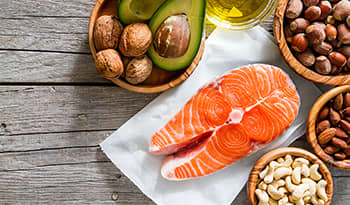
When selecting foods to increase your lycopene intake, note that, since lycopene is a fat-soluble nutrient, it’s best absorbed when consumed with fats, such as olive oil, seeds, and nuts. (It’s no wonder that the olive oil and tomato-heavy Mediterranean diet is deemed one of the healthiest in the world.)
Is It Possible to Have Too Much Lycopene?
Eating a surplus of foods that contain carotenoids, such as lycopene, has no known deleterious side effects. However, the old saying—that eating too many carrots can cause your skin to take on an orange hue—holds true. Excessive consumption of lycopene can cause a deep orange discoloration of the skin, a harmless condition called lycopenodermia.
There have also been several side effects associated with high-lycopene consumption, including diarrhea, gas, cramps, and a loss of appetite. Few of us could possibly eat that much lycopene-rich food—also, the nontoxic reaction lycopenodermia can be abolished by going lycopene-free for a couple of weeks—but, as with everything, moderation is key.
Should I Take a Lycopene Supplement?
Obtaining your nutritional needs from food is often the wisest choice. That said, lycopene supplements can help you increase your consumption of this superstar nutrient. Do note that lycopene should be avoided by women who are pregnant or breastfeeding. Furthermore, lycopene may increase the risk of bleeding when taking certain medications, such as aspirin and blood thinners; the same goes for mixing lycopene with some herbs, including ginkgo biloba.
In Sum
Evaluate your needs with your physician or health care professional to guarantee that lycopene is right for you, your current medications and supplements, and your needs; should you go with one, be sure to select a quality brand that delivers quality ingredients.
In the meantime, wash off that organic tomato and take a hearty bite, knowing you are doing your body a solid.
References:
- Zhang Q, Wang J, Gu Z, Zhang Q, Zheng H. Effect of lycopene on the blood-spinal cord barrier after spinal cord injury in mice. Biosci Trends. 2016 Sep 5;10(4):288-93. doi: 10.5582/bst.2016.01062. Epub 2016 Jun 29. PMID: 27357536.
- Perveen R, Suleria HA, Anjum FM, Butt MS, Pasha I, Ahmad S. Tomato (Solanum lycopersicum) Carotenoids and Lycopenes Chemistry; Metabolism, Absorption, Nutrition, and Allied Health Claims--A Comprehensive Review. Crit Rev Food Sci Nutr. 2015;55(7):919-29. doi: 10.1080/10408398.2012.657809. PMID: 24915375.
- Zhong Q, Piao Y, Yin S, Zhang K. Association of serum lycopene concentrations with all-cause and cardiovascular mortality among individuals with chronic kidney disease: A cohort study. Front Nutr. 2022 Dec 5;9:1048884. doi: 10.3389/fnut.2022.1048884. PMID: 36545466; PMCID: PMC9760801.
- Shafe MO, Gumede NM, Nyakudya TT, Chivandi E. Lycopene: A Potent Antioxidant with Multiple Health Benefits. J Nutr Metab. 2024 Jun 8;2024:6252426. doi: 10.1155/2024/6252426. PMID: 38883868; PMCID: PMC11179732.
- La Placa M, Pazzaglia M, Tosti A. Lycopenaemia. J Eur Acad Dermatol Venereol. 2000 Jul;14(4):311-2. doi: 10.1046/j.1468-3083.2000.00107.x. PMID: 11204525.
- Khan UM, Sevindik M, Zarrabi A, Nami M, Ozdemir B, Kaplan DN, Selamoglu Z, Hasan M, Kumar M, Alshehri MM, Sharifi-Rad J. Lycopene: Food Sources, Biological Activities, and Human Health Benefits. Oxid Med Cell Longev. 2021 Nov 19;2021:2713511. doi: 10.1155/2021/2713511. PMID: 34840666; PMCID: PMC8626194.
DISCLAIMER:
These statements have not been approved by the Food and Drug Administration. These products are not intended to diagnose, treat, cure, or prevent disease.



























































 Table of Contents